
ITF World Cup Powerbreaking Training | Kevin Jansen's Road to the 2026 World Cup

Updated: Aug 5
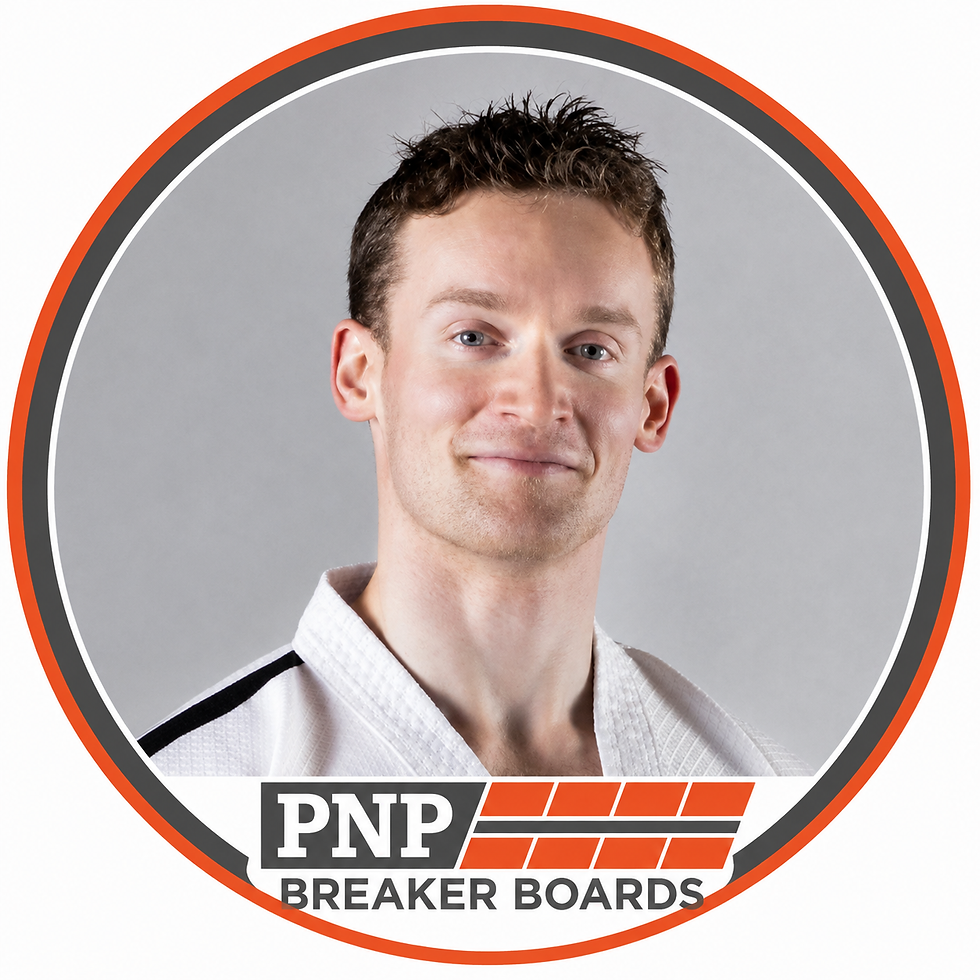
Meet Kevin Jansen – ITF World Cup Powerbreaking Champion
Hi everyone! My name is Kevin Jansen, IV-degree black belt from the Netherlands, current I.T.F. (Spain / GM Weiler Group) World Cup Champion in Powerbreaking and proud PNP Breakerboards sponsored athlete. From September 28th until October 4th 2026 I will be in Benidorm Spain to compete at the 10th I.T.F. World Cup to defend my title.
In the upcoming weeks I will use this PNP blog to share a lot of interesting information with you regarding my preparation campaign. A lot of different aspects will be covered such as my training routine, training equipment, competition analysis, general powerbreaking technique, mental preparation and other subjects.
You can also follow me on my instagram account @ironfistETN where I frequently post informative videos on my preparation as well. I hope you will enjoy this blog!
This series will also give you an inside look at my ITF World Cup powerbreaking training and the methods I use to prepare for elite-level competition.

Balancing Elite Taekwondo Training with Everyday Life
For you to have a clear image of my preparation circumstances I will give you a brief look into my private life. I’m 33 years old and live together with my lovely wife Renata and Charlie, our 1-year-old golden retriever. Over the years I’ve managed to equip our home with a sturdy powerbreaking setup in our garden, and a basic but effective homegym setup in the attic.


I have a full-time government job, which allows me to reasonably flexibly divide my working hours between the office and working from home. Especially during the generally calm summer period this allows me to frequently work from home, minimizing travelling time between work and training since I’m able to do roughly 80% of my training at my home-setups. This is ideal, since the summer months are directly connected to this year’s World Cup at the end of September.
Setting My Goal for the 2026 ITF World Cup
Whether you’re an elite-level athlete, a recreational sports practitioner or anything in between, training becomes way more effective once you have a clear goal in mind. My goal for the 2026 I.T.F. World Cup is to defend my title and to return home as a 2-time Champion. Now to determine how I should train to achieve this goal, I have to identify what the performance level is that is required to win the 2026 World Cup.
The rules for the senior male powerbreaking division are as follows: in the first round athletes perform one foot technique on 4 white PNP Breakerboards (choice between sidekick, turning kick and reverse turning kick) and one hand technique on 3 white PNP Breakerboards (choice between forefist punch and knifehand strike). In subsequential rounds the board amounts will increase until a winner can be declared. My preferences for this format are the sidekick and forefist punch. Even though I will train all 5 techniques for the upcoming competition season, those two will be at the center of this year’s preparation.
Building My ITF World Cup Powerbreaking Training Routine
I’ve launched my World Cup preparation campaign on May 28th, exactly 4 months before the tournament. As we’re moving into August now this means we are halfway in terms of prep-time, and things are moving smoothly so far. As August starts, my training schedule will now change drastically to really push myself towards peak-performance. Let me give you a look at my training routine so far, followed by some explanation:
Training routine June-July
Day | Type of training | Subject of training | Details |
1 | Powerbreaking | Sidekick & Punch | Focus on volume for muscle memory |
2 | Strength | Legday | Squats & hamstring work |
3 | Strength | Anterior chain | Chest/(front)shoulders/triceps |
4 | Powerbreaking | Sidekick & turning kick | Focus on volume for muscle memory |
5 | Rest |
|
|
6 | Mobility | Movement | Explosiveness, core, stretching |
7 | Strength | Posterior chain | Back/(back)shoulders/biceps |
8 | Powerbreaking | Sidekick & Knifehand | Focus on volume for muscle memory |
9 | Strength | Legday | Squats & hamstring work |
10 | Strength | Anterior chain | Chest/(front)shoulders/triceps |
11 | Powerbreaking | Sidekick & Reverse turning kick | Focus on volume for muscle memory |
12 | Rest |
|
|
13 | Mobility | Movement | Explosiveness, core, stretching |
14 | Strength | Posterior chain | Back/back)shoulders/biceps |
Key Takeaways from My Training Programme
My regimen is split over a 2-week timeframe as opposed to the traditional 1 week. This is due to the recovery time for the joints and bones after intense powerbreaking sessions. Training all 5 techniques in a single week with plenty of volume would cause overtraining at this stage.
The exception is the sidekick. In my experience the sidekick is the most complicated technique in terms of technical execution. On the other hand, the attacking tool of the sidekick (footsword) is the least prone to over taxation out of all the competition technique attacking tools. Because of these two facts the sidekick can and should be practiced more than the other competition techniques.
For powerbreaking the aim at this stage is to take the rough edges away from the technical execution and to create muscle memory by performing a lot of repetitions per technique. The number of boards per break will gradually increase over the weeks but remains secondary to technical execution and consistency in successful breaks.
At this stage my strength training should focus on building up raw strength and muscle mass. Compound exercises such as the squat, barbell row, benchpress and overhead press are at the center of the strength routine. As August comes closer there will be a transition to more explosive movements, with the addition of resistance bands.
Looking Ahead to the Next Stage of Preparation
Now that you have a general image of the starting point of this campaign we can go into deeper detail in future blogs. Which strength exercises have I included in my regimen and why? How are the strength exercises performed? How do I build up a single powerbreaking session? How do these sessions progress over the weeks? What are the goals for the next training phase and how do I progress into it? These questions and more will be answered in week 3 of this blog. Every stage of my ITF World Cup powerbreaking training has been carefully planned to help me perform at my very best when I step onto the competition floor in Benidorm. For week 2 I will discuss another key element of my World Cup preparation: the selection criteria for World Class training materials and why PNP Breaker boards meet the highest standards.
Stay tuned for my next blog!
Train with the boards trusted by elite competitors.
Kevin Jansen relies on PNP Breaker Boards as part of his preparation for the 2026 ITF World Cup. Explore our range of rebreakable boards and discover why martial artists around the world choose PNP for consistent performance, reliability and realistic breaking practice.
Browse the PNP Breaker Boards range today.


Comments