
Power Breaking Training: How to Start Your Board-Breaking Journey

Updated: May 7
Power breaking is one of the most exciting and rewarding aspects of Taekwondo training. It develops precision, confidence, focus, technique, and explosive power — while also testing mental discipline and commitment.
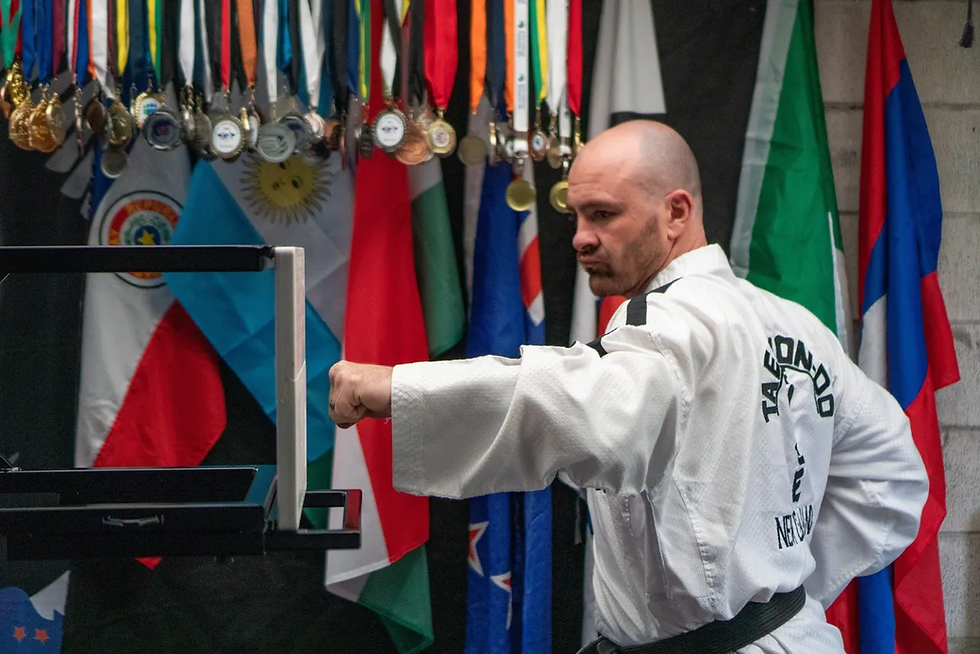
Whether you’re a beginner looking to try your first board break or an instructor helping students progress safely, following the right training approach is essential.
Power Breaking Training for Beginners
1. Find a Reputable Taekwondo School
The first step in your power-breaking journey is choosing a quality Taekwondo school with experienced instructors.
Look for a club that:
Has qualified and experienced instructors
Teaches proper breaking technique and safety
Uses structured progression methods
Encourages controlled, disciplined training
Incorporates safe and reusable training equipment
A strong instructor will help you build confidence gradually and ensure your technique develops correctly from the start.
2. Master the Fundamentals First
Before attempting power breaking, you should build a strong foundation in the basics of Taekwondo.
Focus on developing:
Kicking technique
Striking accuracy
Timing and coordination
Balance and stability
Speed and power generation
Power breaking is not simply about strength. Correct technique, body alignment, timing, and focus are what create effective breaks.
Working consistently with your instructor will help improve both your technical ability and confidence.
3. Start with Beginner-Friendly Breaking Boards
One of the biggest mistakes beginners make is attempting breaks that are too difficult too early.
Instead, begin with softer and lower-resistance materials such as:
Foam training boards
Beginner rebreakable boards
Lightweight plastic practice boards
Many martial arts schools start students with reusable boards like the PNP Breaker Boards 12.5 Break Strength, which are designed specifically for beginners to build correct technique and confidence.
Using progressive break strengths allows students to improve safely without unnecessary risk of injury.
4. Focus on Proper Breaking Technique
Successful power breaking relies heavily on technique.
Key areas to practice include:
Correct striking surface
Body positioning
Follow-through
Hip rotation
Speed and acceleration
Mental commitment
Breaking attempts should always be controlled and deliberate rather than aggressive or uncontrolled.
Repetition and consistent training are essential for building the precision and confidence needed for successful breaks.
5. Progress Gradually
As your confidence and ability improve, you can gradually increase the challenge level.
This may include:
Thicker boards
Higher break strengths
Multiple board breaks
More advanced kicking techniques
Combination breaks
Progression should always happen at a pace that feels controlled and safe.
Rushing into advanced breaks too early can negatively impact technique and increase injury risk.
6. Prioritise Safety During Training
Safety should always come first during power-breaking practice.
Protective equipment may include:
Hand wraps
Gloves
Shin protection
Headgear (when sparring is involved)
Students should also:
Warm up properly before training
Use approved training equipment
Train under supervision
Stop immediately if pain or injury occurs
Quality training equipment and proper instruction help reduce risk while improving long-term performance.
Why Power Breaking Benefits Martial Artists
Power breaking offers far more than just visual impact.
Benefits include:
Improved confidence
Greater focus and discipline
Better striking accuracy
Enhanced power generation
Increased mental resilience
Stronger technical understanding
For many students, breaking through their first board becomes a major milestone in their martial arts journey.
Final Thoughts
Power breaking takes patience, consistency, discipline, and practice to master.
By focusing on strong fundamentals, safe progression, and proper technique, beginners can steadily build the skills and confidence needed to succeed.
Whether you are training for grading, competition, or personal achievement, structured power-breaking practice can become one of the most rewarding parts of your martial arts experience.
Frequently Asked Questions
How do beginners start power breaking in Taekwondo?
Beginners should start by learning proper Taekwondo techniques, training with qualified instructors, and using beginner-friendly breaking boards designed for safe progression.
What are the best breaking boards for beginners?
Reusable low-resistance boards such as the PNP Breaker Boards 12.5 Break Strength are ideal for beginners because they help build confidence and technique safely.
Is power breaking safe for beginners?
Yes. When taught correctly with proper supervision, safe progression, and suitable training equipment, power breaking can be a safe and rewarding part of martial arts training.
Do you need strength to break boards
No. Successful board breaking relies more on speed, technique, timing, and focus than pure strength. Proper body mechanics are key to effective break.
How long does it take to learn power breaking?
Progress varies depending on training frequency, confidence, and technique development. Many beginners can achieve their first successful board break after consistent foundational training and supervised practice.
Progress varies depending on training frequency, confidence, and technique development. Many beginners can achieve their first successful board break after consistent foundational training and supervised practice.
Ready to Start Your Power Breaking Training?
Whether you’re a beginner building confidence or an instructor looking for reliable training equipment, PNP Breaker Boards offers durable, reusable breaking boards designed for safe, progressive martial arts training.
Explore our range of rebreakable boards, compare break strengths, and find the right training solution for your club, school, or personal training journey.
Train safely. Progress confidently. Break consistently.


Comments